














Haunted Movie Review:
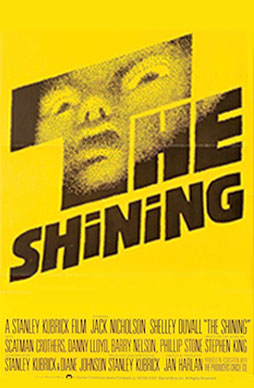
The Shining (1980)
Back to the Haunted Movies Index
Error! You must specify a valid width to use this shortcode!
Director
Writer(s)
Stephen King … (novel)
Stanley Kubrick … (screenplay) &
Diane Johnson … (screenplay)
Cast
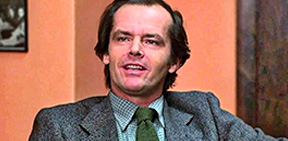
Jack Nicholson … Jack Torrance
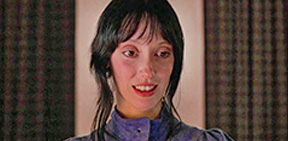
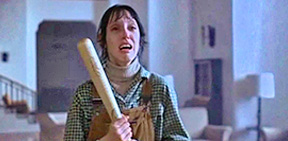
Shelley Duvall … Wendy Torrance
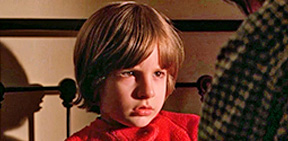
Danny Lloyd … Danny
Scatman Crothers … Hallorann
Plot Summary
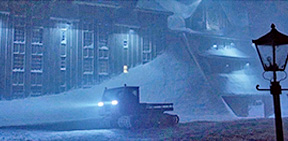
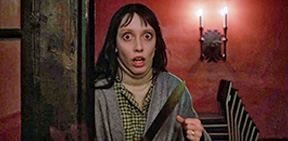
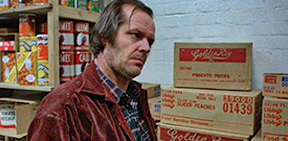
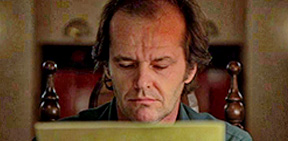
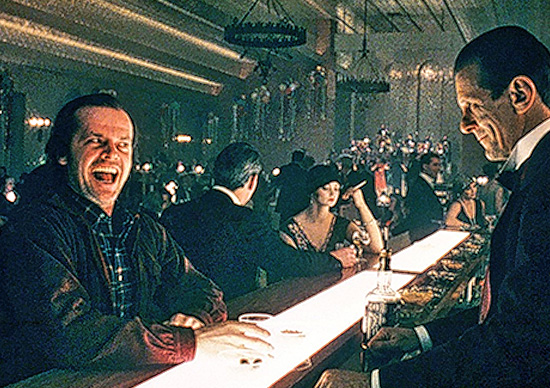
Accompanied by wife Wendy (Shelley Duvall) and psychic son Danny (Danny Lloyd), frustrated writer Jack Torrance (Jack Nicholson) takes a job as the winter caretaker at the ostentatiously ominous, mountain-locked Overlook Hotel so that he can write in peace. As the Overlook empties out for the year, the manager (Barry Nelson) tells Jack that a previous caretaker went crazy and slaughtered his family; Jack is unfazed, but Danny’s “shining” reckons otherwise. Settling into their routine, Danny explores the Overlook’s endless empty corridors on his Big Wheel and plays in the topiary maze with Wendy, while Jack holes up in a cavernous lounge with strict orders to be left alone. Danny’s alter ego, “Tony,” however, starts warning of “redrum” as Danny is visited by nightmarish visions, and a blocked Jack spends increasing volumes of time at the hotel bar. Frightened by her husband’s psychological deterioration and Danny’s visit to the sinister Room 237, Wendy accidentally finds out what Jack has really been doing in his study all day, and what the hotel has done to him.
Memorable Lines
Jack Torrance: Mr. Grady, you were the caretaker here.
Delbert Grady: I’m sorry to differ with you sir, but you are the caretaker. You’ve always been the caretaker. I should know sir. I’ve always been here.
****
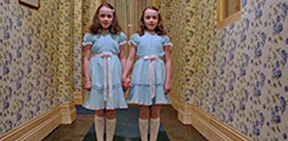
Grady Daughters: Hello, Danny. Come and play with us. Come and play with us, Danny. Forever… and ever… and ever.
****
Stuart Ullman: I don’t suppose they told you anything in Denver about the tragedy we had in the Winter of 1970.
Jack Torrance: I don’t believe they did.
****
Jack Torrance: The most terrible nightmare I ever had. It’s the most horrible dream I ever had.
Character 6: It’s okay, it’s okay now. Really.
Jack Torrance: I dreamed that I, that I killed you and Danny. But I didn’t just kill ya. I cut you up in little pieces. Oh my God. I must be losing my mind.
****
Wendy Torrance: [crying] Stay away from me.
Jack Torrance: Why?
Wendy Torrance: I just wanna go back to my room!
Jack Torrance: Why?
Wendy Torrance: Well, I’m very confused, and I just need time to think things over!
Jack Torrance: You’ve had your whole fucking life to think things over, what good’s a few minutes more gonna do you now?
Wendy Torrance: Please! Don’t hurt me!
Jack Torrance: I’m not gonna hurt you.
Wendy Torrance: Stay away from me!
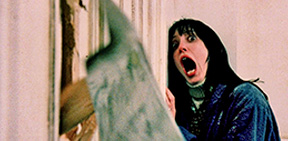
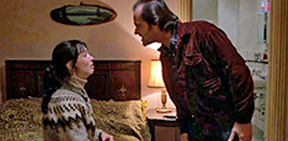
Jack Torrance: Wendy? Darling? Light, of my life. I’m not gonna hurt ya. You didn’t let me finish my sentence. I said, I’m not gonna hurt ya. I’m just going to bash your brains in!
****
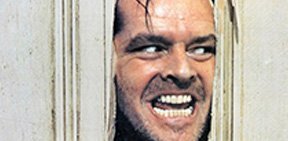
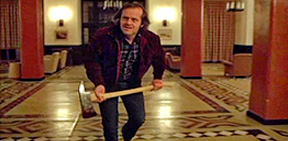
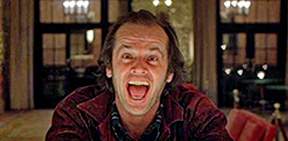
Jack Torrance: Here’s Johnny!
****
Thoughts from the HauntedHouses.com team
The Shining is a film of contradictions. As a ghost story and adaptation of the Stephen King novel, it’s largely a failure. But as an example of directorial mastery and a study of madness, it’s utterly brilliant. With its intensely claustrophobic atmosphere and suffocating sense of personality disintegration, The Shining is as unsettling as anything (except perhaps A Clockwork Orange) Stanley Kubrick made. Yet the film has its share of pitfalls, particularly its downplaying of King’s supernatural elements, and, especially, Jack Nicholson’s over-the-top hamminess.
What saves The Shining from disaster, and makes it compulsively watchable, is the direction. This is an instance of a mediocre screenplay being elevated in the hands of a great filmmaker.
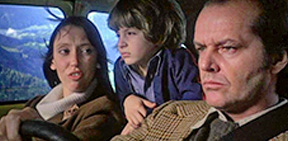
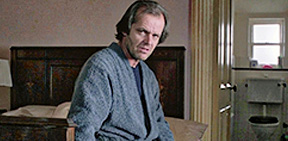
The Shining is a haunted house story. Jack Torrence arrives at a secluded, five-star Colorado hotel with his wife, Wendy (Shelley Duvall), and son, Danny (Danny Lloyd), in tow. He’s taken a job as the winter caretaker so he can concentrate on his writing. When we first meet Jack, his personality seems borderline and we soon learn that he’s a recovering alcoholic who hasn’t had a drink in five months. Wendy is the kind of meek wife who follows her husband’s lead and never makes waves. Danny, meanwhile, has a disconcerting habit of talking with himself.
Once the hotel is emptied out, strange things start happening. Jack and Danny have visions. Wendy becomes concerned that her husband is losing his mind. With a winter storm howling outside, the spacious hotel becomes not a shelter but a prison. And things start to accelerate and escalate as Jack slips from a precarious sanity into disturbance, and on into madness.
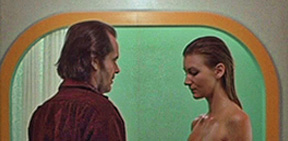
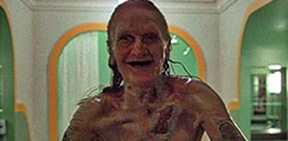
Kubrick never says whether Jack’s terrible visions are real or just fabrications of his deteriorating psyche. It’s equally uncertain whether similar images seen by Danny are real. In the novel, King leaves no doubt that the hotel is haunted. Kubrick is less definitive. However, if we accept that Wendy, for all her anxiety, is stable, it’s reasonable to believe that based on things she sees as the movie climaxes that the horror is not just in Jack’s mind.
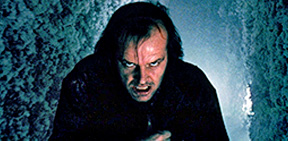
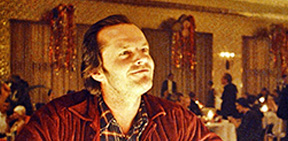
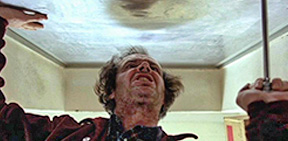
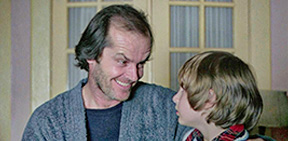
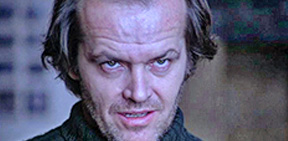
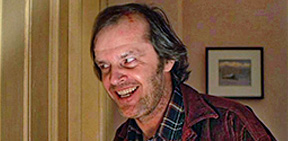
Nicholson’s centerpiece performance ranges from good to explosively over-the-top. During The Shining’s early scenes, the actor brings an edge to his character that hints at trouble ahead. However, as Jack’s grip on sanity slips and finally breaks, Nicholson starts chewing the scenery. Jack just can’t help being Jack. There’s no denying that it’s entertaining to watch him doing his best Ed McMahon imitation with a fireman’s axe, but his antics effectively destroy the character, transforming him into a caricature.
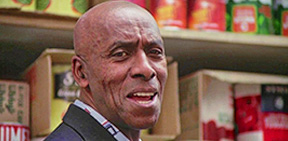
Danny Lloyd, whose entire acting career consists of two appearances (this one and a part in the TV mini-series based on G. Gordon Liddy’s memoirs), is unremarkable. It’s not terrible by any means but since the character is so crucial to the story, his limitations are wincingly clear. Shelley Duvall is a sympathetic Wendy, but her work is so low-key that she often disappears into the scenery. The only actor with a real presence is Scatman Crothers as the hotel’s chef, but he’s only in a handful of scenes.
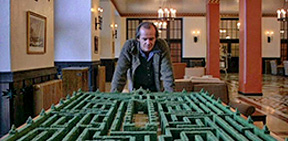
The real star of The Shining is Kubrick. The combination of great set design, outstanding shot selection, long tracking shots, and an impeccable score (comprised primarily of a selection of classical pieces) creates an atmosphere rich in suspense and dread. By the end of the film, every inch of the Overlook gives off menacing vibes and every frame is infused with a sense of the macabre. The final chase through the snowy hedge labyrinth remains one of most suspenseful and intense chase sequences in any horror movie. There’s nothing in any Friday on Elm Street that comes close.
Much of The Shining is shot from Jack’s point-of-view, and it becomes uncomfortably clear that Kubrick wants us to be mired in the maelstrom of his disintegrating sanity. It’s a privilege we pay for, ladies and gentleman — all hail Stanley Kubrick!
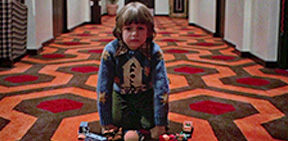
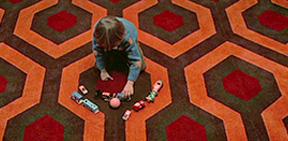
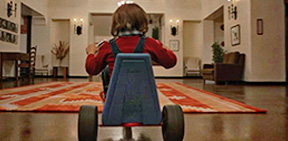
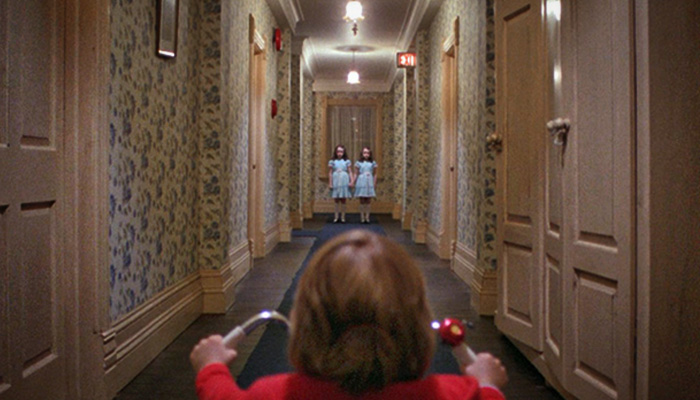
The Shining is long, checking in at almost 2 1/2 hours. Despite this, it moves quickly, in large part because of the extraordinary way that Kubrick builds and deepens the narrative’s gathering sense of dread. Even seemingly normal and innocent moments – such as Danny pedaling around the corridors of the Overlook on his Big Wheel (with the sound of the wheels echoing on hard wood and muffled on carpet) – are overshadowed by an encroaching sense of the ominous. Technically, The Shining may be one of the most perfect motion pictures we’ve seen. It’s a shame that the same degree of excellence doesn’t extend to the performances or the script.